Calgary, Alberta
An application next door is a clue, not a construction schedule
A live neighbourhood search can surface submitted files, public-comment periods, approvals, appeals and permits at once. Here is how to read the differences before drawing a conclusion.

Type a Calgary community into DevelopmentApplications.ca and the results resist a tidy headline. In a live Bowness search on September 6, some files were submitted, some were open for public comment, some had been approved, some were under appeal and others had reached the permit stage.
That mixture is the point. A development application tells you that something entered a municipal process. It does not, by itself, tell you that the proposal was approved, that a permit was issued or that construction will begin.
Start with the stage, not the project name
A proposal description can be vivid enough to feel settled: a rowhouse, a child-care facility, a land-use change. The status label tells you where the file actually stood when the municipal data was acquired. Submitted means the authority has a filing. Public comment open means a statutory notice or advertising period is underway. Approved means a decision exists, not that the work has started.
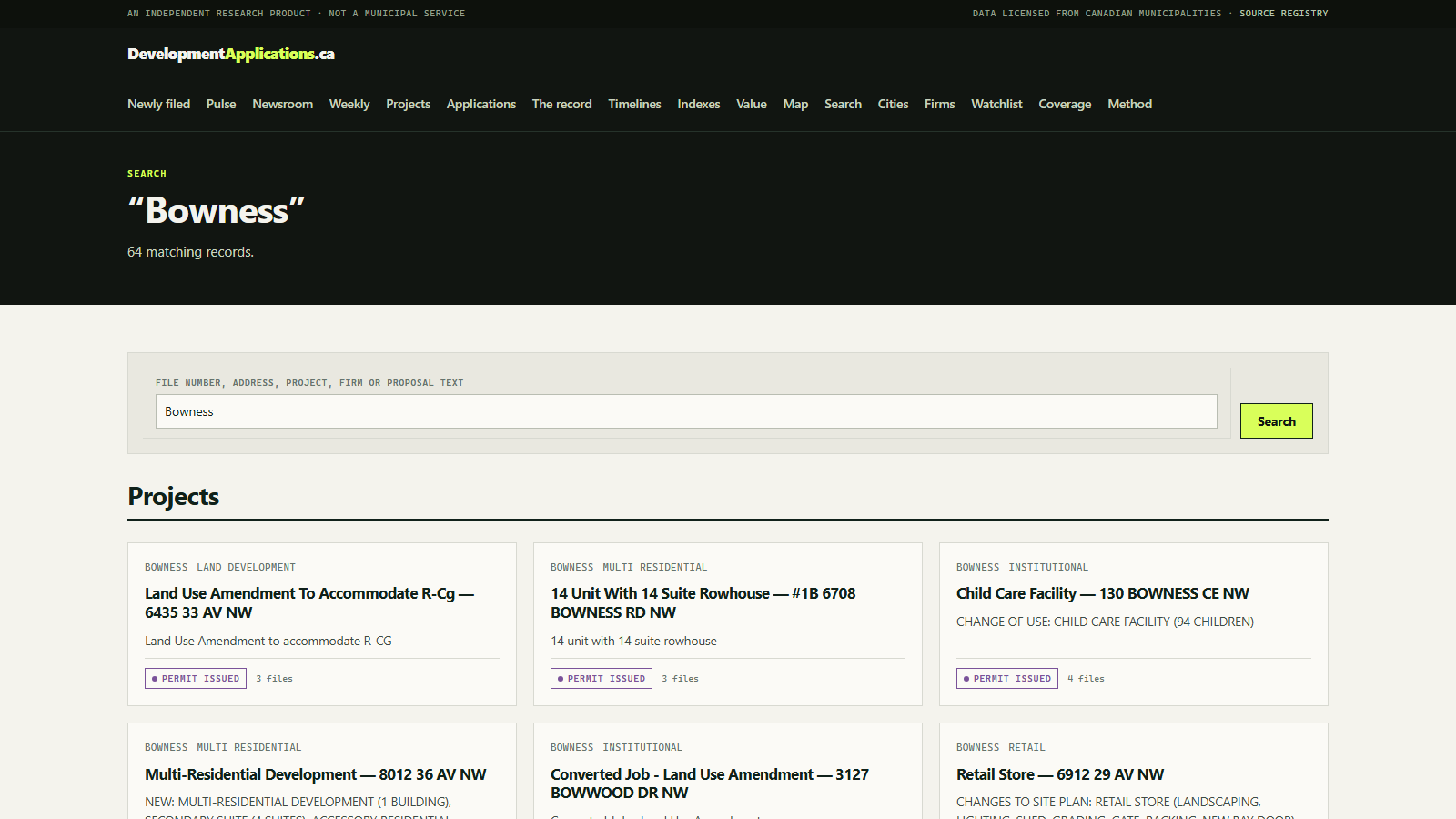
Under appeal is different again. The decision is before an appeal body and the outcome is not final. Permit issued means work may lawfully begin; it still is not evidence that a crew is on site. Reading those distinctions takes a few more seconds than scanning a map pin, and can prevent a much larger misunderstanding.
Keep Calgary's own wording in view
Municipalities do not use one shared status vocabulary. Calgary, for example, can decide a development permit and later release it after the appeal period. DevelopmentApplications.ca shows a plain-language stage beside the municipality's own wording, so a reader can use the common label without losing the official record underneath it.
That is especially useful when a source status is ambiguous. The tool can leave a stage as unknown while still displaying Calgary's published wording, instead of forcing every municipal phrase into a confident answer.
One address can carry several municipal files
A development can generate a land-use redesignation, a development permit and one or more building permits. Reading only the newest file can hide the earlier planning path. Treating every file as a separate development creates the opposite problem and makes one project look like several.
The project view groups related records while keeping each municipal file visible. For a homeowner or buyer, that means you can follow the sequence without assuming that a rezoning, development approval and building permit are interchangeable events.
Use search as the start of due diligence
Search can begin with a community, an address, a municipal file number, a project name, a firm or words from a proposal. The result is a practical way to notice activity near a home search, then open the underlying file and check the date, source wording and current stage.
It is not a substitute for the authoritative City record, a title review, a real-property report or professional planning and legal advice. The Calgary open-data sources also have limits: the platform's coverage atlas notes that the available data does not include document links, and the rezoning layer lacks a decision-date field. An absent field should stay absent from the conclusion.
The useful question is what happens next
If a file is merely submitted, the next event may be review, circulation or public notice. If it is open for comment, the official notice tells you how and when to participate. If it is approved or under appeal, look for the decision and appeal record. If a permit was issued, a site visit can tell you whether work has actually begun.
DevelopmentApplications.ca is part of our Commercially research network. We use it here because the live search makes an important habit visible: follow the record one stage at a time, and never turn a proposal into a construction promise.
Continue reading

City and Policy · Sep 5, 2026
Westbrook's next chapter starts with a plan for the land around the station
After buying the land back in 2024, Calgary is taking another run at bringing homes, shops and public space to the station area.

New Construction · Sep 5, 2026
The different projects shaping Calgary's western gateway
West Crestmont, Medicine Hill and the land around Canada Olympic Park belong in the same conversation, but they are not one development.