
Keystone Hills, Calgary
Keystone Hills could turn planned job land into a new neighbourhood
A northeast Calgary proposal would replace planned employment land with low- and medium-density housing, public reserve and infrastructure. Council has not decided.
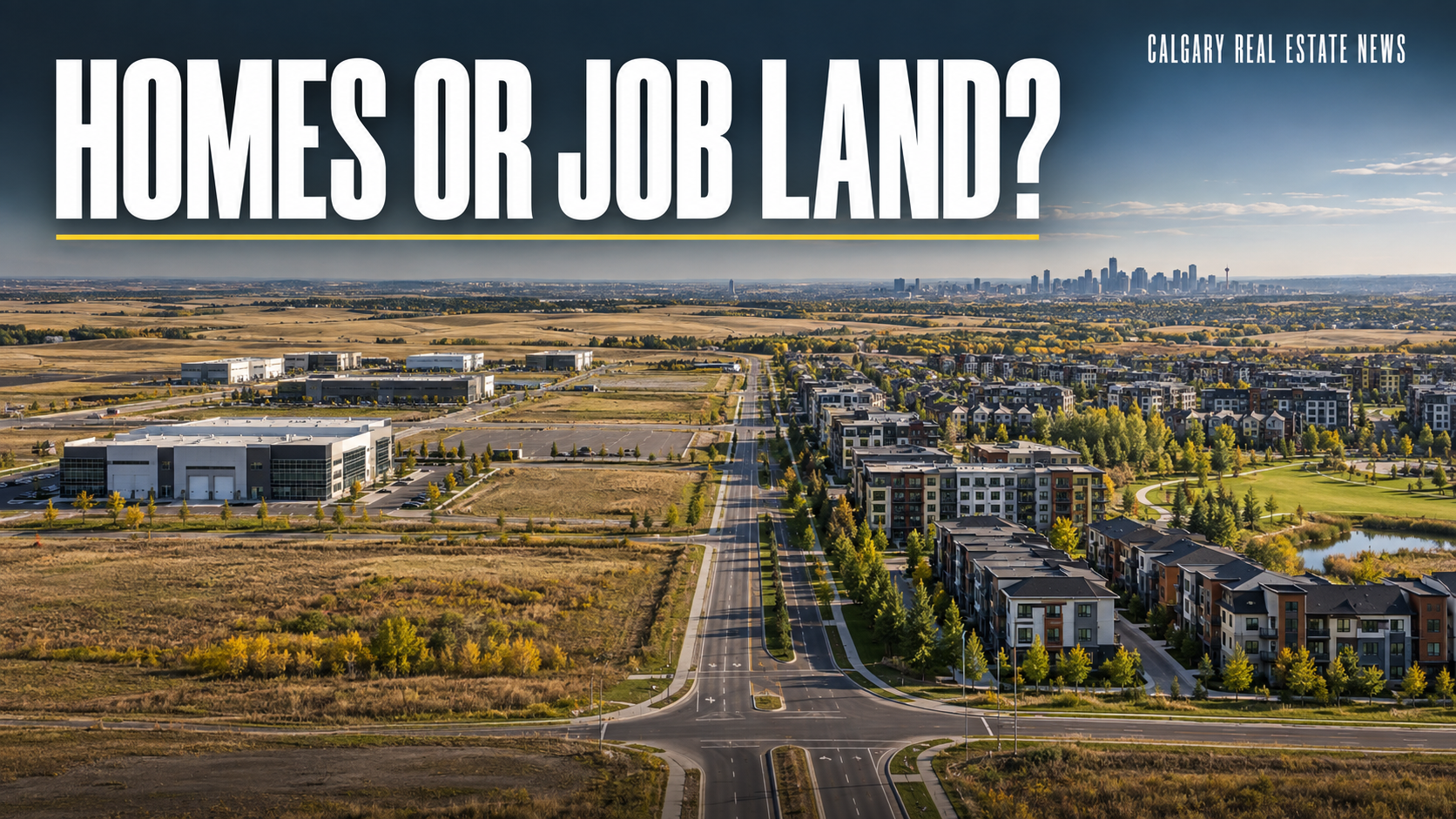
On Calgary's northeast edge, a planning application is putting two kinds of growth on the same page. Land marked for employment would become a neighbourhood area, with low- and medium-density housing, public reserve and infrastructure. Council is scheduled to consider the change at its October 6 public hearing.
The useful word here is proposed. This is not an approved subdivision, a construction start or a promise that homes will be ready on a particular date. It is a request to change the planning framework for part of Keystone Hills.
This is planned job land, not an operating job site
Calgary's notice says the Municipal Development Plan designation would change from Industrial – Employee Intensive to Developing Residential – Planned Greenfield with an Area Structure Plan. The Keystone Hills Area Structure Plan would make the same basic move, replacing Industrial/Employment Area with Neighbourhood Area.
That distinction matters. The hearing is not about closing a business or converting an occupied industrial building. It is about whether land planned for future employment should instead support a residential neighbourhood and recreational amenities.
The proposed land-use map includes Residential – Low Density Mixed Housing districts, a Multi-Residential – Medium Profile district, School, Park and Community Reserve, and land for city and regional infrastructure. Those district names describe what could be permitted. They do not tell us how many homes would be built, what they would cost or when someone could move in.
Housing supply and employment land both have a claim
Turning more greenfield land toward housing can create room for a wider mix of homes. It also reduces land that the long-range plan had set aside for jobs. That is the real planning choice, and it deserves more than a simple more-homes-is-good or keep-everything-as-is response.
Employment land can shape where people work and how far they travel. Residential land can shape how much choice households have and whether a growing part of the city develops as a complete neighbourhood. Council will be weighing those functions together, not choosing between an empty field and a finished community.
The history adds useful context. A 2019 City report for the broader lands described about 32.85 hectares planned for a mix of light industrial, commercial, residential, stormwater and public open-space uses. The current application concerns a portion of one property within that larger area. It should not be read as automatically rewriting every earlier approval around it.
A reserve label is not a school opening date
The proposed map includes School, Park and Community Reserve. That protects room in the planning framework for public purposes, but it does not confirm that a school will be built, assign a catchment or establish an opening date. Those decisions involve later planning, funding and delivery steps.
The same caution applies to roads, servicing and recreation. The public notice confirms the categories being proposed, not the final design of every street, pathway or amenity. The outline-plan material and administration's detailed analysis will matter when the full hearing agenda is posted.
What to watch before Council votes
Calgary's notice lists noon on September 28 as the written-comment deadline and says the full October 6 agenda will be available October 1. That agenda should make it easier to test the trade-offs: the anticipated home count and housing mix, road and utility sequencing, the amount and placement of public reserve, and administration's assessment of the employment-land change.
Until Council hears the item, the honest status is straightforward. Keystone Hills has a proposal to turn planned job land into a new neighbourhood. It does not yet have approval, a construction schedule or a guaranteed set of community amenities. The next story belongs to the evidence in the agenda and the decision in the chamber.
Continue reading

Planning and Development ·
Calgary's next rowhouse debate comes down to location
Six local area plans could gain the same lane-and-location test for future rowhouse and townhouse land-use amendments. Council hears the proposal November 9.

City and Policy · Historical event · Jul 23, 2025
Calgary hit a housing target. It was not move-in day.
In July 2025, Calgary passed a federal housing-growth target ahead of schedule. The milestone counted permitted homes, not 44,276 occupied front doors.

Property Research ·
An application next door is a clue, not a construction schedule
A live neighbourhood search can surface submitted files, public-comment periods, approvals, appeals and permits at once. Here is how to read the differences before drawing a conclusion.