
Calgary CMA, Alberta
Calgary's 2025 rents did not move together
Bachelor occupied rents rose 5.5 per cent, while one-bedroom rents edged down and larger units barely moved. The split is more useful than one citywide headline.
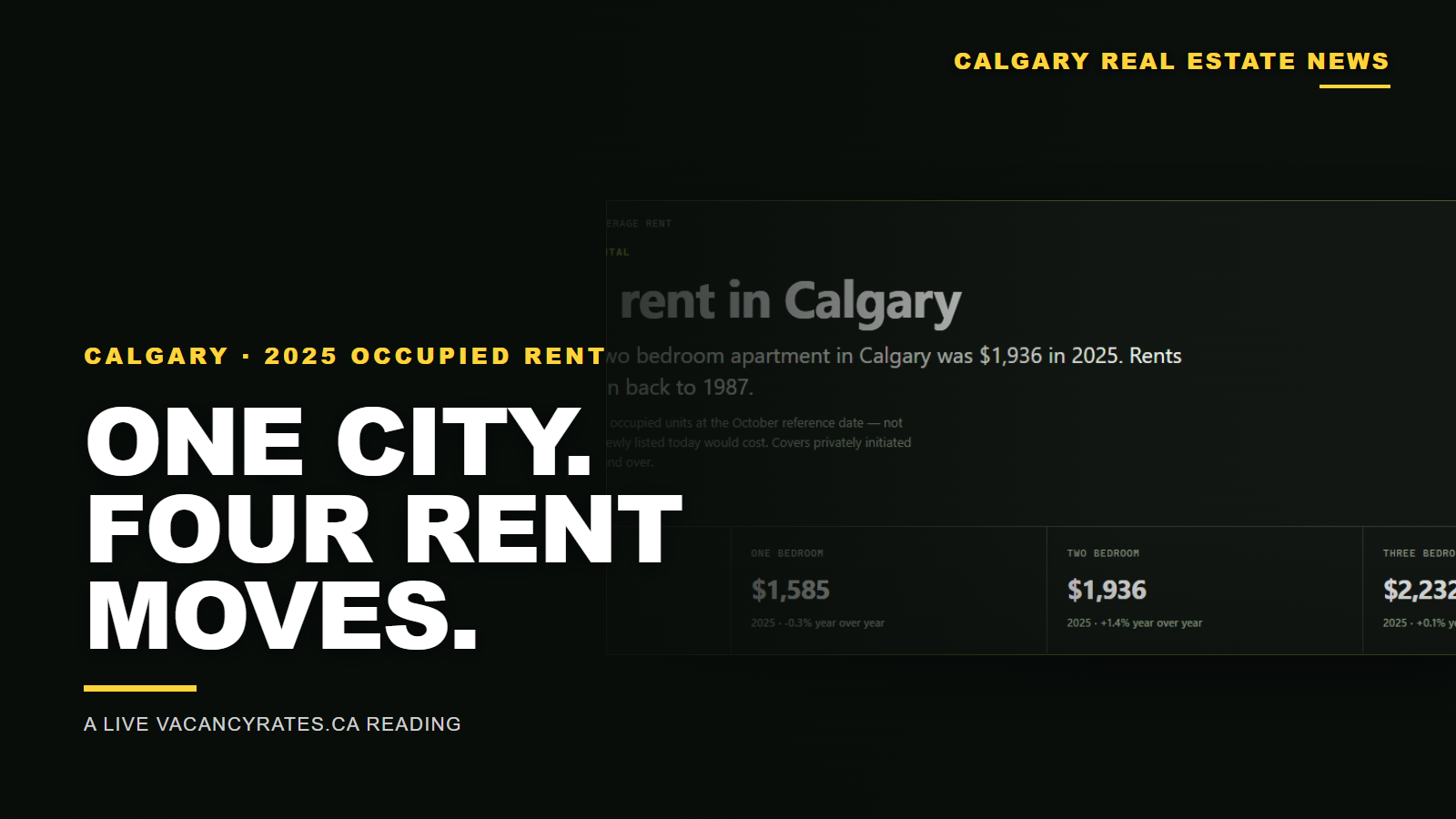
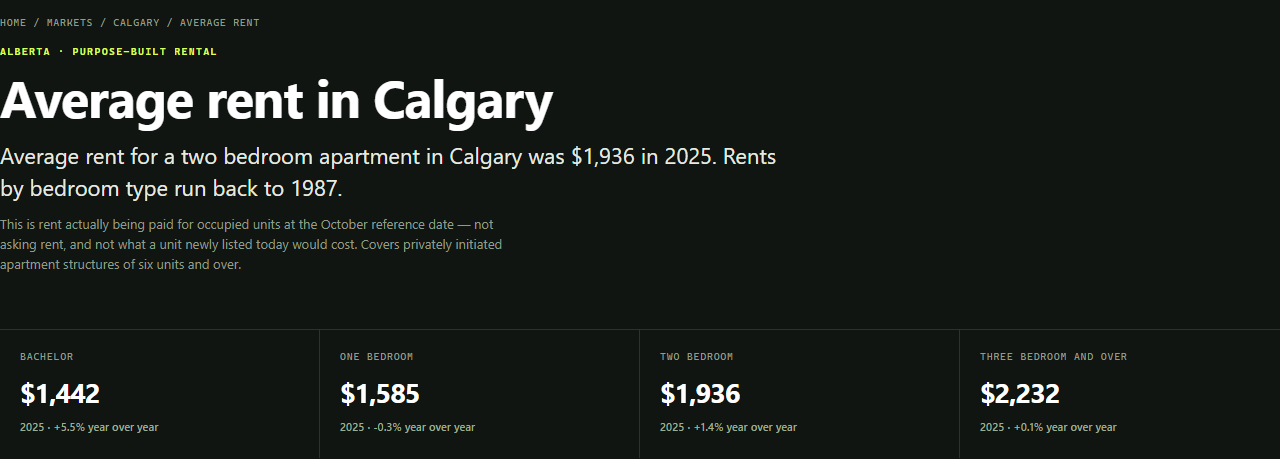
One number cannot carry Calgary's 2025 rent story. The average occupied rent for a bachelor apartment rose 5.5 per cent from a year earlier. One-bedroom rent slipped 0.3 per cent. Two-bedroom rent rose 1.4 per cent, while the three-bedroom-and-larger measure barely changed at 0.1 per cent.
Those figures describe rent actually paid in occupied, privately initiated apartment buildings with at least six units at the October 2025 reference date. They do not describe today's advertised rent, every rental home in Calgary or what one particular lease should cost.
The bachelor line kept climbing
Bachelor rent moved from $1,367 in 2024 to $1,442 in 2025, a $75 increase. The other three categories moved much less: one-bedroom rent fell $5 to $1,585, two-bedroom rent rose $27 to $1,936 and rent for units with three or more bedrooms rose $3 to $2,232.
| Bedroom type | 2024 | 2025 | Year-over-year move |
|---|---|---|---|
| Bachelor | $1,367 | $1,442 | +5.5% |
| One bedroom | $1,590 | $1,585 | -0.3% |
| Two bedroom | $1,909 | $1,936 | +1.4% |
| Three bedrooms or more | $2,229 | $2,232 | +0.1% |
The source records the measures; it does not identify one cause for the difference between bedroom types. Changes in who remains in the surveyed stock, which buildings are represented and the rents paid within each unit category can all shape an average. The split is a reason to ask a better question, not to invent a tidy explanation.
A quieter year followed a much larger reset
The year before was much more forceful across all four categories. From 2023 to 2024, bachelor rent rose $158, one-bedroom rent rose $121, two-bedroom rent rose $187 and rent for units with at least three bedrooms rose $244. In 2025, that common direction disappeared.
This is why 'Calgary rent' can be a misleading shortcut. A household looking for a bachelor unit did not meet the same annual movement as one comparing two-bedroom apartments. Even within a bedroom category, an average smooths over neighbourhood, building age, condition, amenities and lease timing.
The series is shown in nominal dollars, without an inflation adjustment. Its value is the consistent annual view, reaching back to 1987. It is not designed to turn a long-run percentage change into a complete measure of affordability.
The average is not a quote for the next unit
The underlying CMHC Rental Market Survey covers privately initiated apartment structures with six or more units. It does not include every condominium rental, basement suite, small apartment building, row home or social and affordable housing unit. A rental listing a reader sees today may sit outside the survey universe entirely.
There is also a timing distinction. October 2025 is the reference period; November 18, 2026 is when we reviewed the live record. A newer page visit does not turn the figure into a current asking-rent measure.
Use the series for context, then test the real choice
For renters, the four lines offer a way to challenge a broad market claim before comparing current homes that actually fit the search. For owners and housing providers, they show how little a single citywide percentage says about one unit or one renewal conversation.
VacancyRates.ca is part of our Commercially research network. We built it to keep the source, reference period and surveyed universe close to the headline number. The most useful conclusion from Calgary's latest rent record is not that rent simply rose or fell. It is that four common apartment types finished 2025 on four noticeably different paths.
Continue reading
Market Data ·
Calgary's 5.0% vacancy rate is narrower than it sounds
The latest purpose-built rental vacancy figure covers a defined October survey universe—not every condo, basement suite or rental home. Here is what the number can and cannot answer.

Neighbourhoods · Film launched · Oct 24, 2026
Acadia is more than its tree-lined first impression
Our October 24 community film opens on mature streets and recreation space. The City profile reveals a neighbourhood with older homes—and a much wider housing mix than one streetscape can show.
Market News · Historical event · Apr 17, 2025
Calgary added homes. The more interesting question was which ones.
The first-quarter 2025 housing tally mixed apartments, secondary suites and family homes. That variety deserves as much attention as the headline total.