
Calgary region, Alberta
Looking back / Aug 11, 2026
Calgary's next big property story might come with a loading dock
Prairie Economic Gateway's August agreement puts the less glamorous side of growth in focus: the infrastructure that industrial land needs before the buildings can follow.
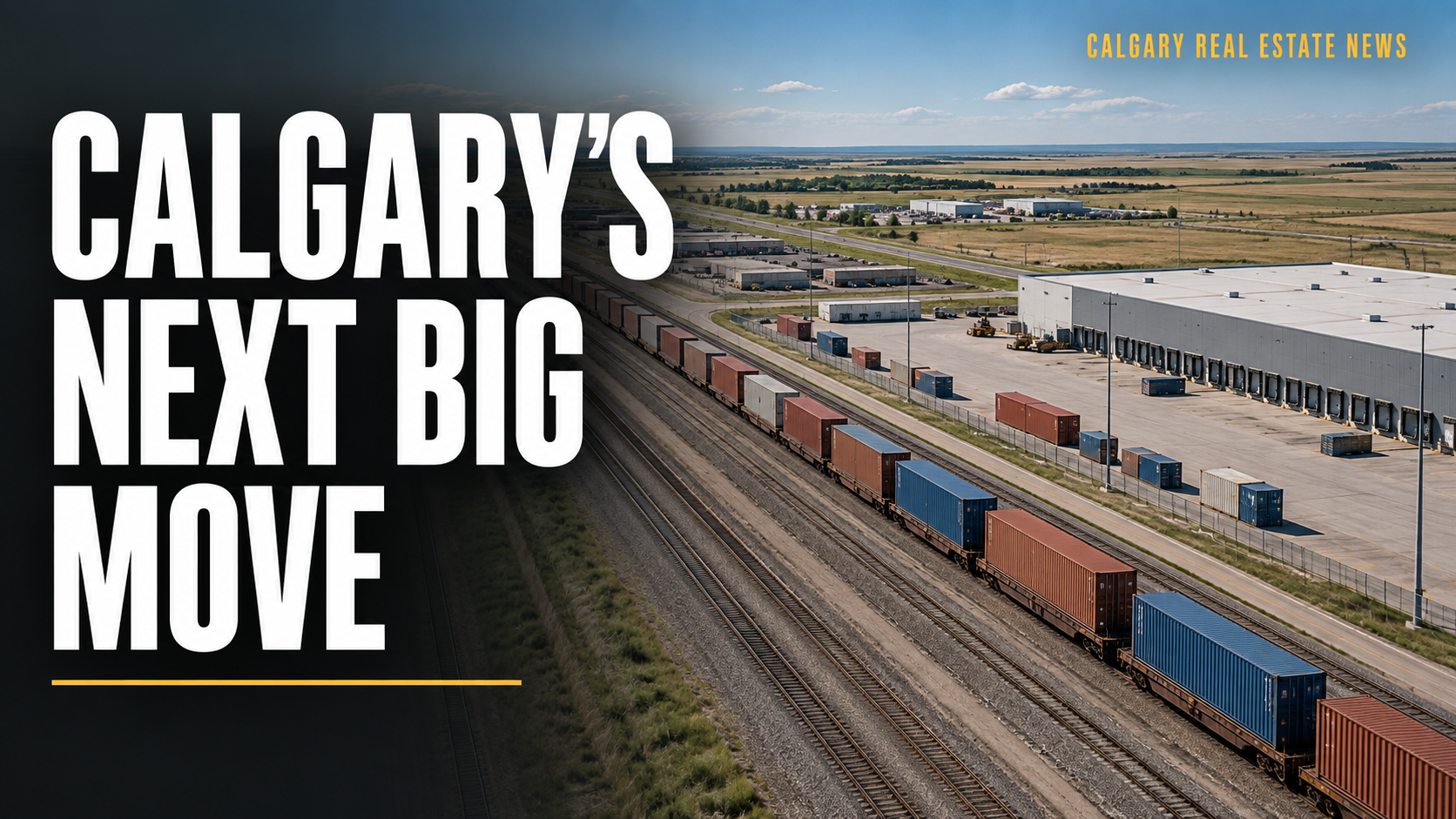
A loading dock does not usually get the attention of a rooftop terrace. Yet some of the region's most consequential property decisions happen long before anyone chooses the finishes for either one.
On August 11, 2026, Calgary, Rocky View County and the Canada Infrastructure Bank announced a project-acceleration agreement for Prairie Economic Gateway. The proposed rail-linked trade and logistics hub sits east of Calgary in Rocky View County, on the CPKC mainline.
The agreement moved the partners into more detailed work on the feasibility, financing and delivery of public off-site infrastructure. It followed an earlier development agreement in 2025. The August milestone concerned the work needed before construction decisions, not an announcement that a new logistics park had opened for business.
The building is only part of the property
For an industrial occupier, a warehouse is not simply a large empty room with a lease attached. The business has to get things in, do something useful with them and get them out again. Land that appears generous from above can still leave difficult questions about how that operation connects to everything around it.
That is why infrastructure deserves a place near the top of a commercial property story. Our reading of the Gateway announcement is that the enabling work, rather than a particular future tenant or building, was the news. The partners were focusing on the conditions needed to make the larger ambition practical.
It is tempting to leap from a regional project announcement to a prediction about nearby land values. We would rather ask more grounded questions. What decisions have actually been made? What remains to be financed? Which access and servicing issues still need to be resolved? Those answers are more useful than a speculative map with a circle around it.
Why residential readers should care, too
A city's property market includes the places where people work, not only the places where they sleep. Industrial growth belongs in that wider picture. The connection should be explored carefully, without pretending that a memorandum can tell us how many people will move into a particular neighbourhood.
For businesses, the most useful next chapter would be concrete information about delivery, costs and what space could eventually accommodate. For residents, it would be a clearer picture of the transport and employment implications. Those are related interests, but they are not identical, and a good regional story should make room for both.
The August agreement is a milestone to follow, not a finished outcome to celebrate in advance. The attraction of this story is precisely that it looks beneath the familiar real estate photograph. Before the first tenant hangs a sign, somebody has to solve the less visible problems. That work may prove every bit as important as the building that finally gets the headline.
Continue reading

Commercial Real Estate · Looking back · Oct 7, 2025
Calgary's record airport summer wasn't just a travel story
YYC's record summer put the airport back in the spotlight. For the property world, the more interesting story also includes the businesses that need to be beside it.
City and Policy · Sep 20, 2026
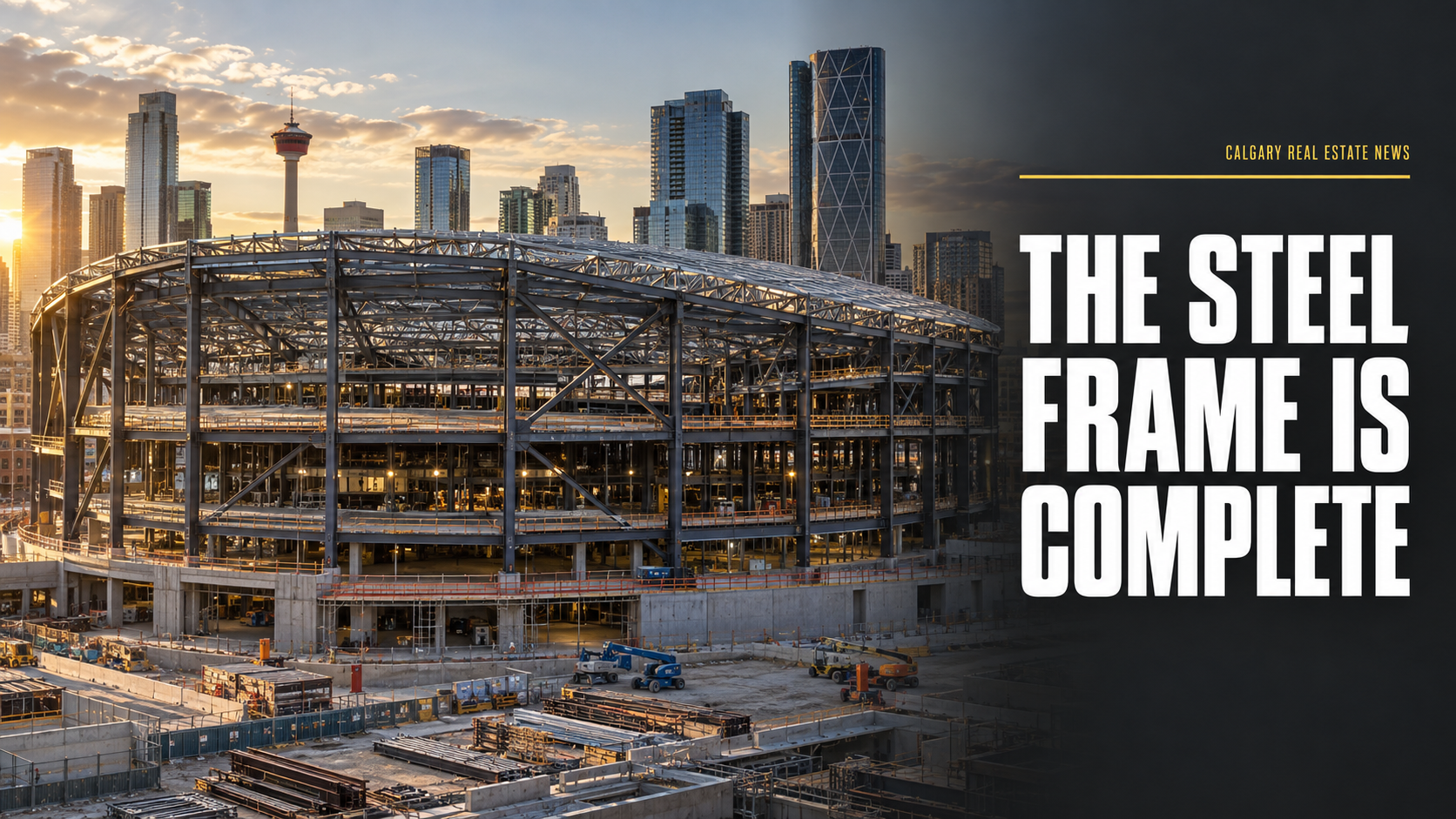
Scotia Place has its full steel frame. The district work is not finished.
The final structural steel beam is in place at Calgary's new arena. Plazas, access and the 6 Street underpass now show why the real estate story extends beyond the venue.