
Greystone, Cochrane
Greystone's industrial parcel could make room for a broader business mix
Cochrane has approved a shift from general industrial to business industrial in Greystone Phase 9. The new rule book broadens the possible business mix, but it is not a development permit or construction start.
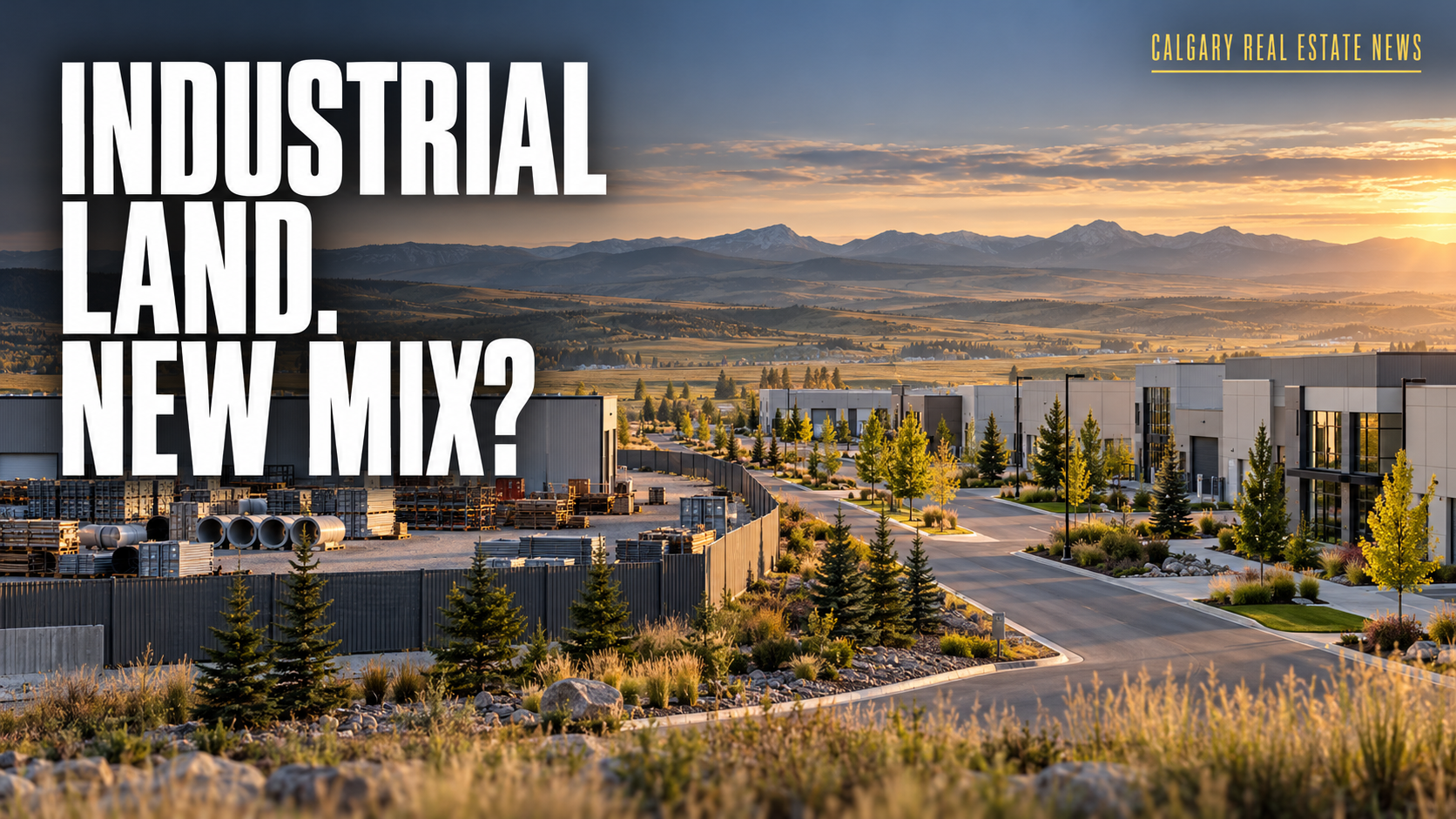
Cochrane has changed the rule book for one Greystone Phase 9 industrial parcel. Council adopted the related Greystone Development Area C Neighbourhood Plan amendments on November 9 and gave second and third readings to Bylaw 15/2026, completing the shift from General Industrial to Business Industrial.
The decision follows the Town's November 2 public hearings. Cochrane's Council summary says the applicant intends to combine the site with the adjacent property and pursue one larger industrial development under the Business Industrial district.
That is a meaningful commercial-planning decision. It still does not approve a building, tenant or construction start. A future site proposal must clear its own development review.
The same industrial label can lead to a different street
Cochrane's current General Industrial district is designed for a broad range of industrial uses. Its purpose statement allows for operations that may take place partly outdoors or need outdoor storage, while requiring any nuisance to stay within the site. The bylaw also says this district should not sit next to residential areas.
Business Industrial is written for a different interface. It combines light-industrial and commercial uses that do not create nuisance outside an enclosed building. The district is intended for visible locations near major roads, with a higher standard of landscaping and site design and compatibility with neighbouring non-industrial land.
For a commercial property search, that is more than a naming exercise. It can change which operations fit the site, how much activity can happen outdoors and what sort of relationship the development is expected to have with the street and nearby uses.
A broader menu still comes with conditions
The Business Industrial district permits uses such as business-support and industrial-support services, innovation services and several automotive categories. Its discretionary list reaches further into offices, child care, eating establishments, fitness and health-care space, hotels, personal services, recreation and retail.
Discretionary does not mean promised. A future proposal in one of those categories would still need its own development review, and the land-use change does not establish demand, financing, servicing, tenants or a construction schedule. The bylaw defines eligibility, not a ready-made business roster.
The redesignation also narrows some of the heavier possibilities associated with General Industrial. Cochrane's current I-G table includes industrial operations and outdoor storage facilities among its uses. That does not prove either use was planned for this parcel; it shows why changing the district changes the range of futures Council is considering.
The neighbourhood plan now tells the same story
Council adopted the related Greystone neighbourhood-plan amendments alongside the land-use change. Its mapped land-use areas and supporting text now point toward the same Business Industrial framework as the zoning bylaw.
That alignment matters, but neither document substitutes for a site-specific approval. A neighbourhood plan guides later subdivision and development decisions. The land-use bylaw establishes the uses and rules available to an application. Detailed plans, access, servicing, building design and operating impacts belong to later evidence.
The zoning is settled. The project is not.
The November 9 decision settles which district applies to the parcel. It does not turn the intended consolidation into an approved development, provide a tenant roster or establish when work could begin.
For nearby residents, the same boundary applies to predictions about traffic, noise or property values: the public record does not yet provide a project detailed enough to support them. For commercial owners and occupiers, the useful question is narrower and more immediate: does the Business Industrial framework fit the kind of work a later application is asked to host?
Continue reading

Commercial Development ·
Rocky View's data-centre question is really about land, power and water
A new County-commissioned report puts the trade-offs behind data-centre growth on the table. The policy work is real; it grants no approval to any individual project.

Development Research ·
One project, many files: how to read Calgary's development paper trail
A land-use change, development permit and building permit can describe different moments in one project. The useful work is knowing which record answers which question.
 Calgary market news
City and Policy · Historical event · May 14, 2024
The rezoning vote changed the starting point, not every lot overnight
Calgary's May 2024 decision expanded low-density housing choices. A zoning change and a specific development approval were still different steps.